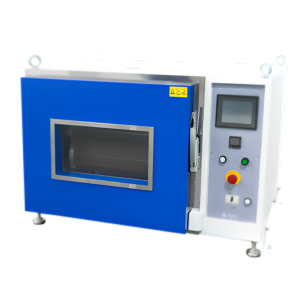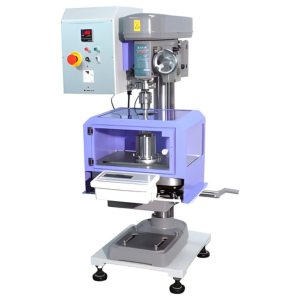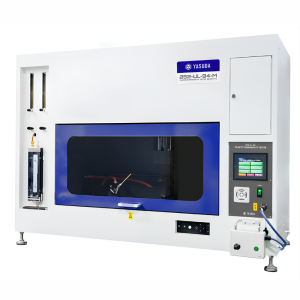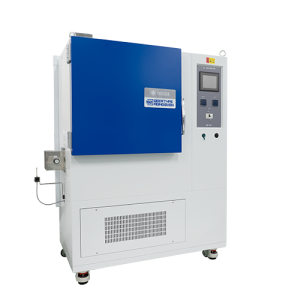
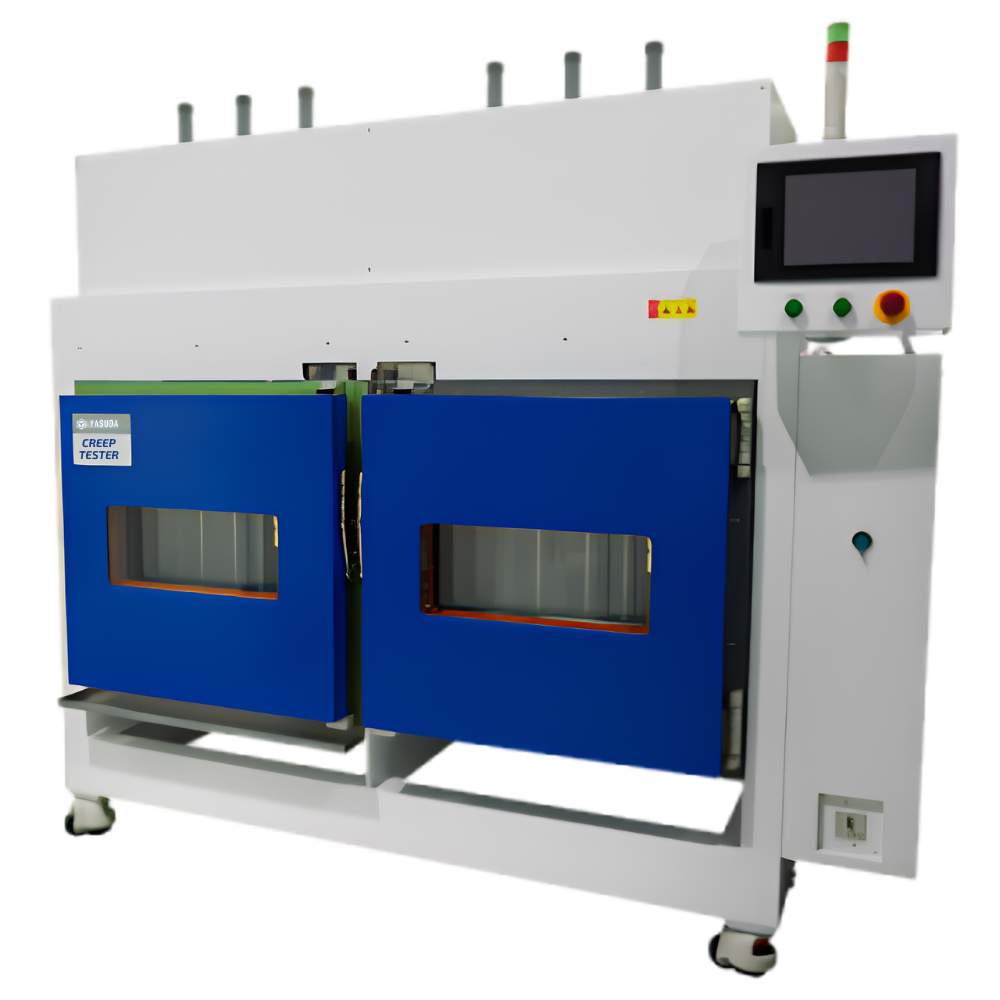
creep testing measures the deformation of materials (creep and stress relaxation) under a constant load, at specific temperatures, and long time. The system utilizes a servomotor control combined with a load cell, which helps minimize impact forces when a specimen fractures. It is capable of performing tests with a maximum capacity of 5–10 kN.
JIS K7115、ASTM D2990、ISO 899-1
| Specification | Details |
|---|---|
| Number of Test Samples | 3, 6, or 10 samples per test |
| Test Sample | Refer to JIS K7161, JIS K6263 |
| Loading System | Servomotor |
| Load | Max. 5 kN (500 kgf), Max. 10 kN (1,000 kgf) |
| Load Measurement | Load Cell |
| Displacement Measurement | Magnetostrictive linear displacement transducer (resolution: 0.01 mm, measurement range: 100 mm) |
| Temperature | Max. 200°C (Option: 300°C) |
| PC Software | Available for Windows |
| Options | Compression frame and platens, bend fixtures, low-temperature chamber, temperature and humidity chamber, split chamber, displacement measurement within the gauge length, stress relaxation test specification |
| Power Source | Vary according to the tester specs. |
| Dimensions and Weight (Approx.) | Vary according to the tester specs. |
Q: How does the Creep Tester (Model No. 145) differ from a standard tensile test?
A: A typical tensile test involves pulling a sample at a constant speed until it breaks to determine its maximum strength. However, Creep Tester the application of compressive or tensile force. Maintained in a fixed state for a long time. (e.g., over several hours or days) to observe the stretching or deformation of a material as time and temperature change—a process essential for estimating its actual service life.
Q: Which model—No.145-A, No.145-B, or No.145-SV—is most suitable for the task?
A: For testing specimens under low compressive force (up to 500 N), we recommend the following model: No.145-A (Pulley) For plastic or rubber that require a higher pressing force of up to 5 kN, we recommend the following model: No.145-B (Balance) However, if you require a system that saves space, reduces the impact force when a specimen breaks, and supports testing Stress Relaxation Model selection guide No.145-SV (Servomotor)
Q: Can the device perform tests under high-temperature conditions?
A: Yes Test chamber capable of heating under standard conditions up to a maximum . 200°C And optional features can be selected to extend the temperature range up to 300°C it can be integrated with an environmental chamber (temperature and humidity control cabinet) to simulate the most realistic environmental conditions.

 Contact Us
Learn More About Us