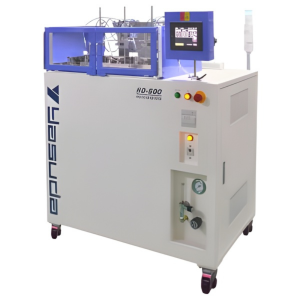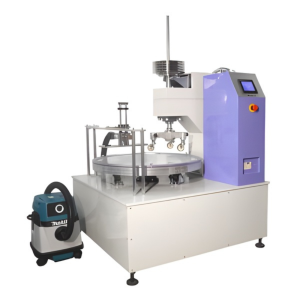
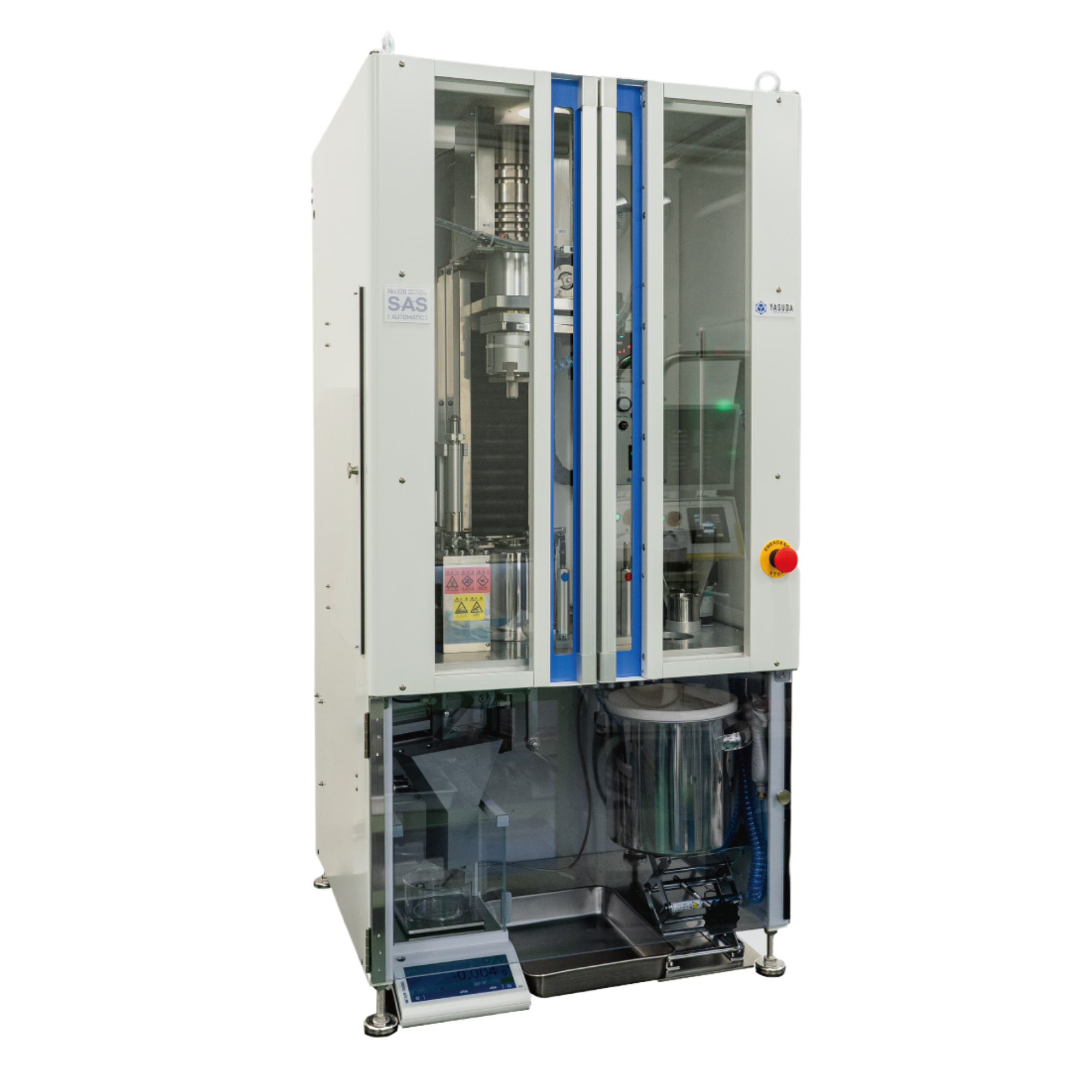
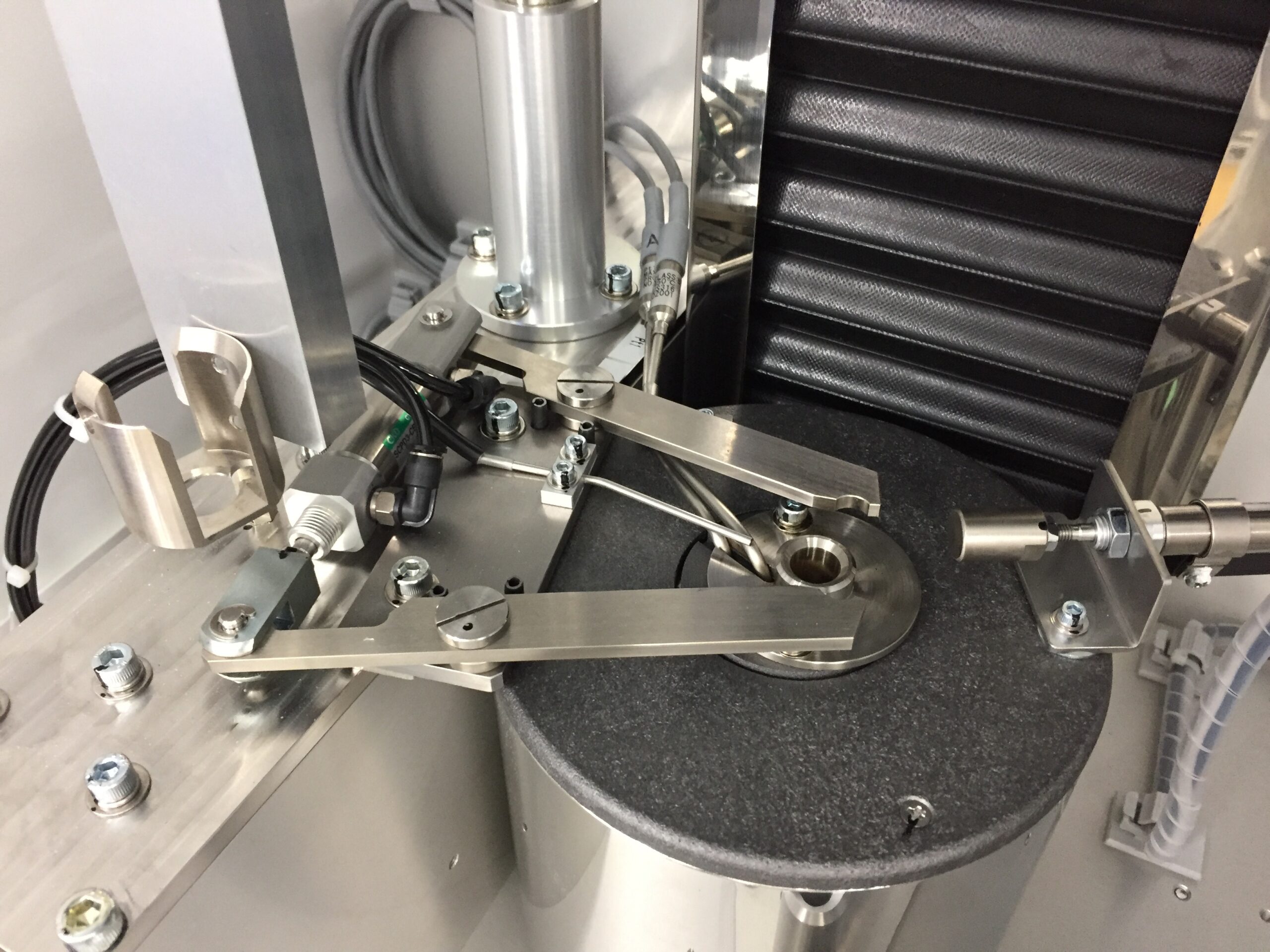
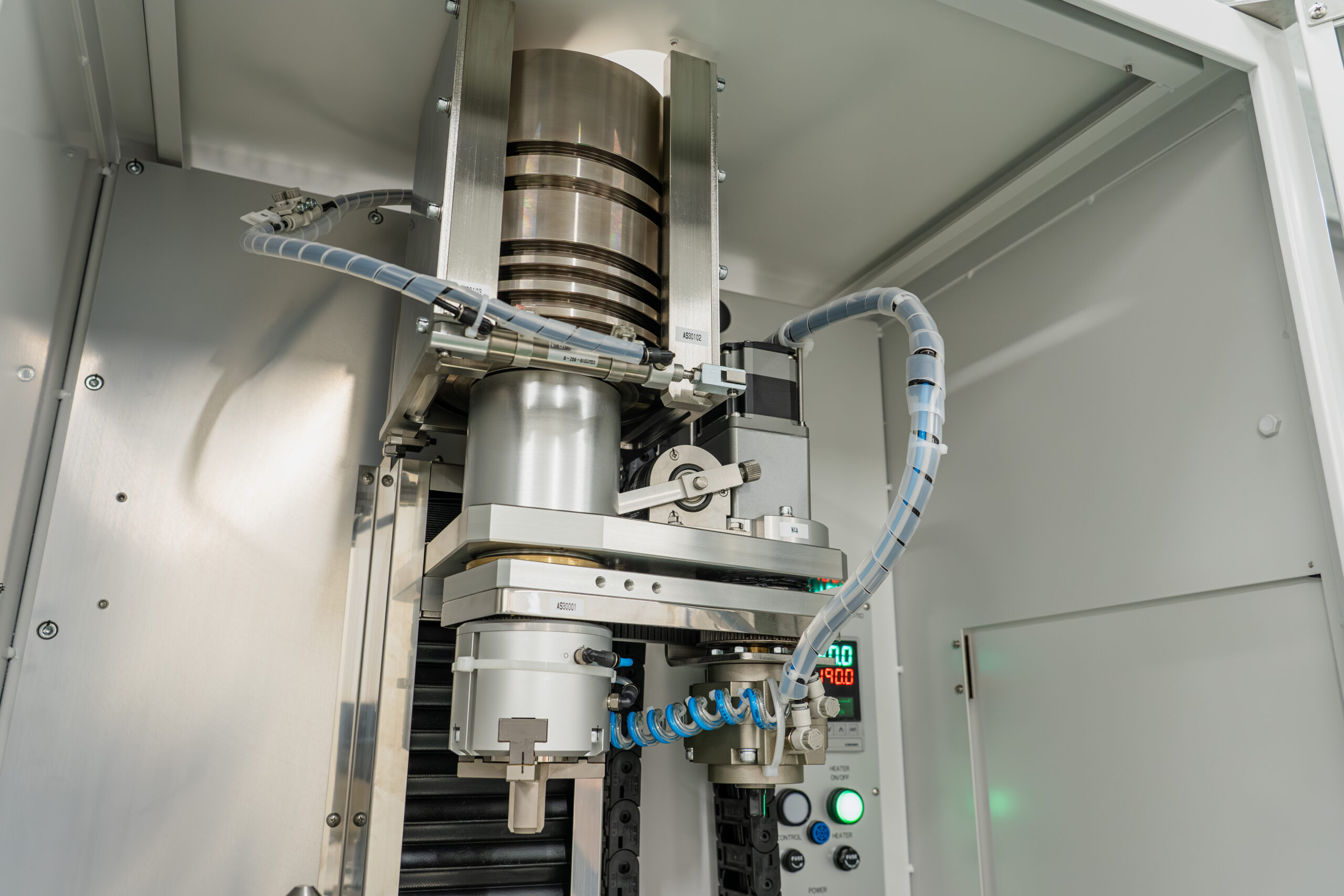
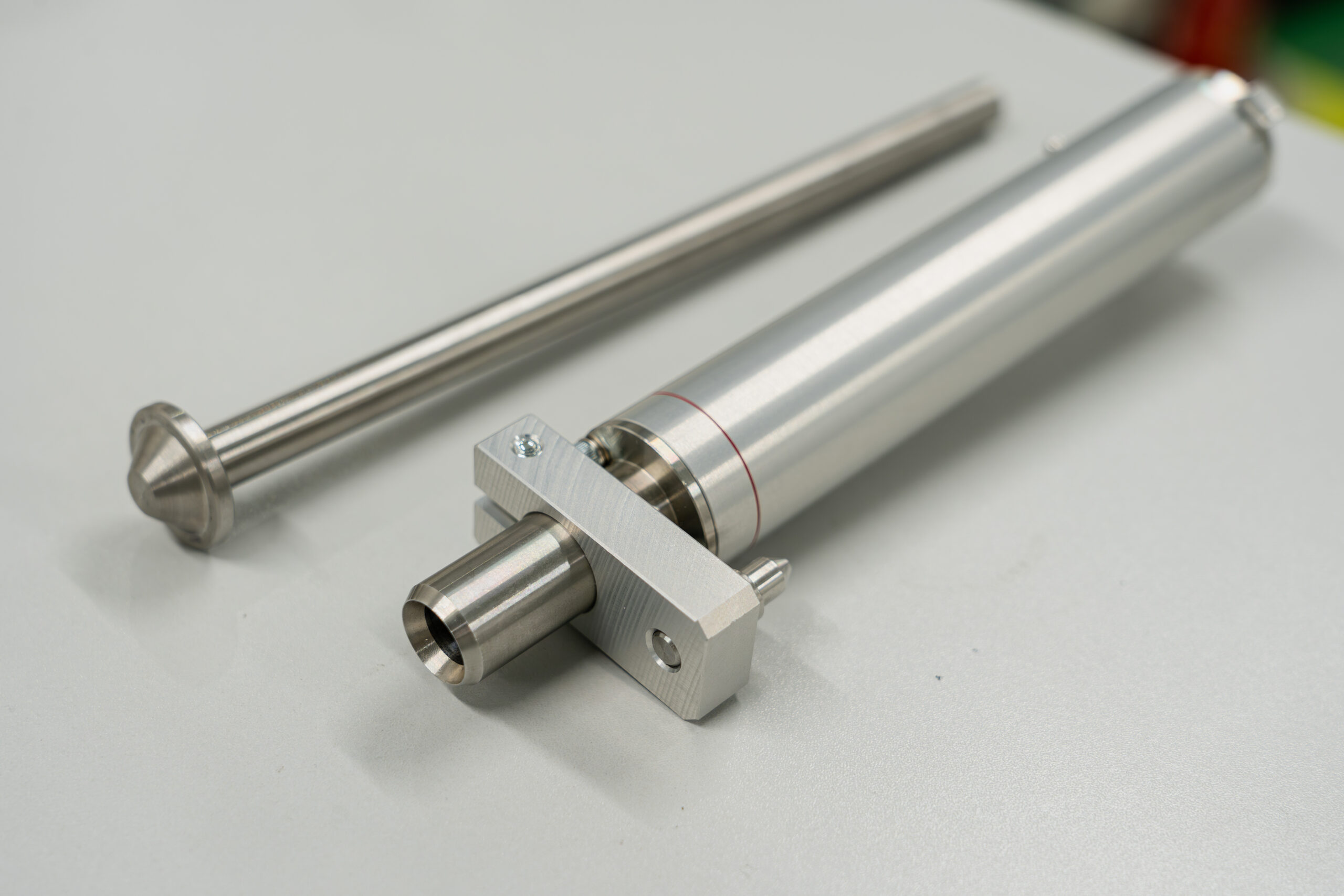
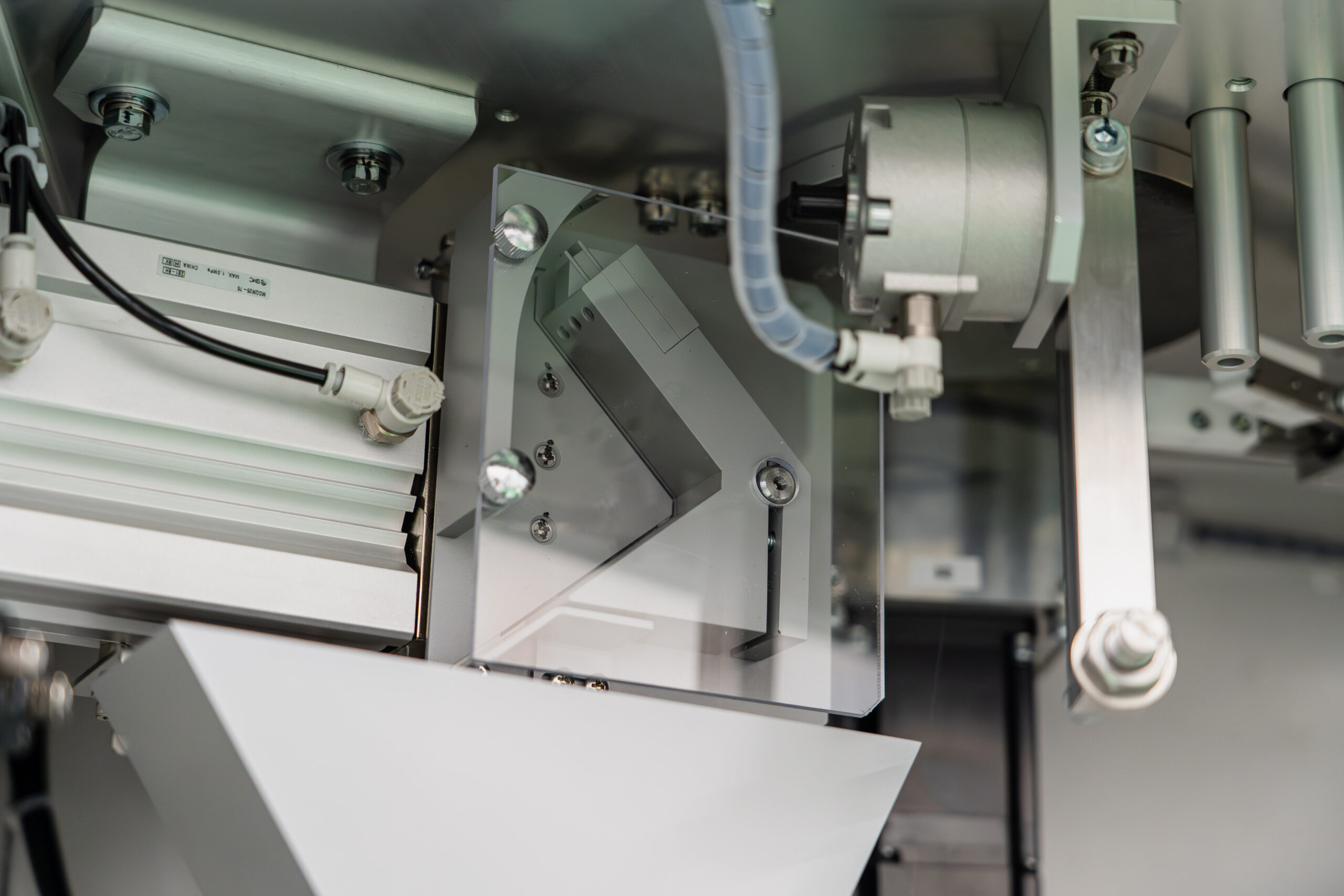
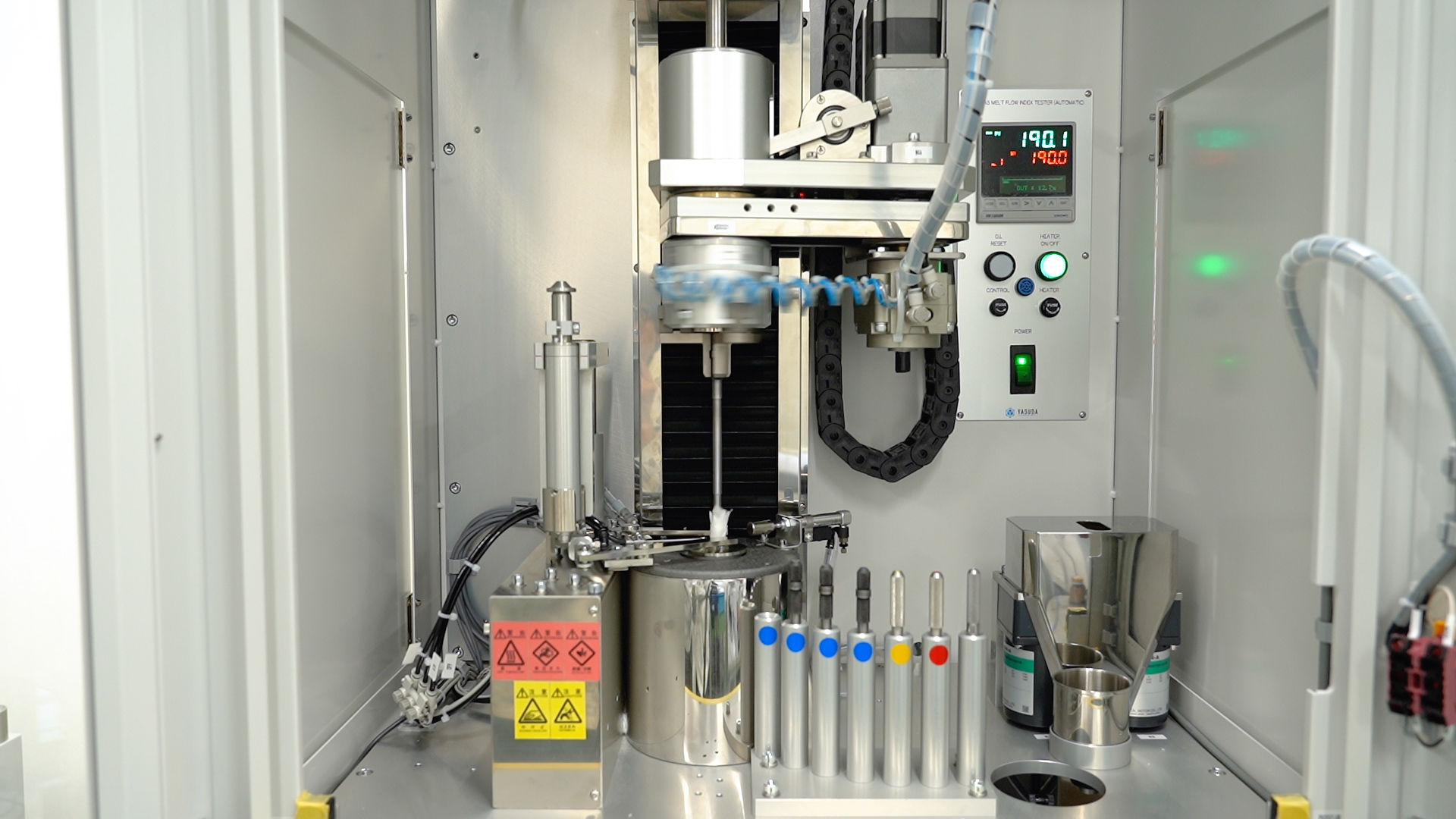
No.120-SAS Yasuda Seiki is Semi auto melt flow index tester, Semi auto MRI designed to measure the flow rate of molten plastics (MFR/MVR). It features a robotic arm system that handles the entire process—from sample loading, application of test weights, and cutting of the extruded plastic strand, to the cleaning of the test barrel. The instrument complies with ISO 1133-1, ASTM D1238, and JIS K7210-1 standards. Engineered to minimize operator-induced variability, it is suitable for testing plastics in various forms, including pellets, flakes, powders, and films.
Reduce human error: automatic system covering plastic feeding, testing, and cleaning of the cylinder upon completion of the test.
Durable and long-lasting: Utilizes a highly stable, intelligent robotic arm mechanism, designed for a durable service life of over 20 years.
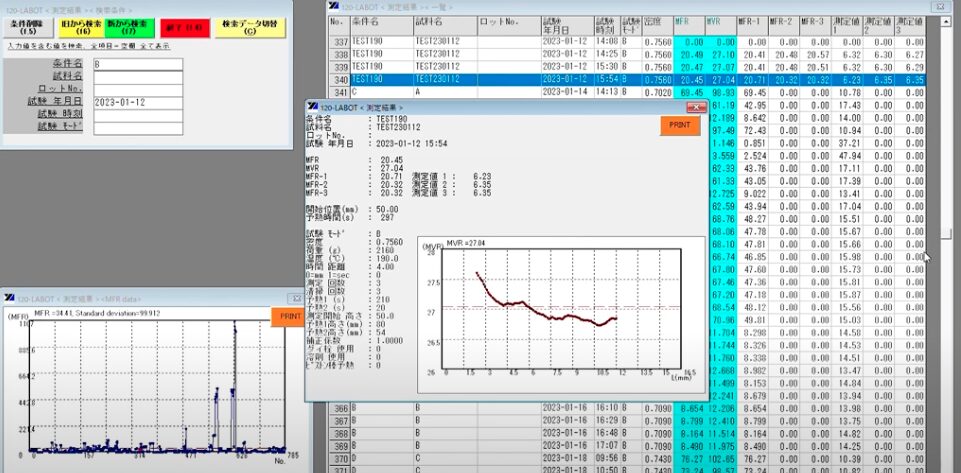
Verify accuracy instantly: Has a system Real-time MVR chart record Helps filter out air bubbles trapped within the molten plastic.
Supports all types of plastic samples: ถ้วยใส่ตัวอย่างเคลือบ Teflon ออกแบบพิเศษ ให้ทดสอบได้ทั้งเม็ดพลาสติก (Pellets), ผง (Powder), แผ่น (Sheet) หรือเกล็ด (Flakes)
| Specification | Value / Details |
|---|---|
| Hangings | 1 or 3 Hangings (2 kinds) |
| Die | φ2.095 ± 0.005 mm, L8.000 ± 0.025 mm |
| Piston | Head Diameter φ9.474 ± 0.007 mm, Head Length L6.35 ± 0.10 mm |
| Cylinder | Inner φ9.550 ± 0.007 mm, L160 mm |
| Temperature Range | Max. 300 °C (Option: Max. 400 °C) |
| Initial Weight | 0.325 kgf |
| Additional Weight | 1.20 〜 21.60 kgf (Please refer to Options below) |
| Test Method | • Method A: Manual (Option: Automatic) • Method B: Automatic |
| Specimen Feeding | Automatic |
| Weight Loading | Automatic |
| Weight Change | Manual (Option: Automatic) |
| Cleaning Mechanisms | |
| Cylinder Cleaning | Automatic (Solvent Cleaning can also be Automatic) |
| Die Cleaning | Automatic |
| Piston Cleaning | Manual (Option: Automatic) |
| Die Cleaning Rod Cleaning | Manual (Option: Automatic) |
| Cleaning Gauze Feeding | Manual |
| Data Processing | • Method A: Manual (Option: Automatic) • Method B: Automatic |
| Method B Measuring | Rotary Encoder |
| Software | Windows Compatible |
| Accessories | Cleaning Rod (Die, Cylinder), Solvent Cleaning Device, Specimen Cup, Cup Holder, Infundibulum, Die Gauge, Spirit Level, Dust Box, Gauze, Air Gun |
| Options | Hastelloy Spec, Specimen Purging Device, Specimen Drying Device, Air Compressor, Temperature Calibration Device, Exhaust Fan (Standard for No.120-LABOT), Smoke-Detection Sensor (Standard for No.120-LABOT) • Additional Weights available: 1.20, 2.16, 3.80, 5.00, 10.00, 21.60 kgf. |
| Power Source | • AC 200 V, 1-Phase, 10 A, 50/60 Hz • AC 200 V, 1-Phase, 15 A, 50/60 Hz (ISO 1133-2 Compatible Type) |
| Air Source | 0.5 MPa or greater |
| Dimensions / Weight (Approx.) | • 1 Hanging: W675 × D645 × H1,370 mm / 200 kg • 3 Hangings: W675 × D725 × H1,370 mm / 220 kg |
Q1: How does the No.120-SAS tester differ from a standard MFR tester?
A: The No.120-SAS features a full-cycle automation system that manages the entire process—from the initiation of testing to the automatic cleaning of the barrel and die—thereby reducing the operator's workload and minimizing errors caused by human intervention. Furthermore, it is built with a highly durable robotic arm designed for a service life of over 20 years.
Q2: If the plastic to be tested has a very high viscosity, will the instrument be able to push all of it out of the barrel?
A: It ensures complete discharge. The unit is equipped with a high-power 30kW motor shaft, specifically designed to effectively extrude and push out highly viscous plastics—or materials with a low flow rate—from the barrel. This makes the post-test cleaning process both safer and easier.
Q3: Is it possible to test plastic samples in powder form or small recycled plastic fragments?
A: Testing is possible. The instrument utilizes a specially designed sample cup from Yasuda Seiki, featuring a Teflon coating that facilitates the easy loading of samples into the barrel. It is highly versatile, accommodating various forms of plastic—including pellets, powders, flakes, as well as films and filaments.

 Contact Us
Learn More About Us